Some technologies have an awkward identity problem once they leave the laboratory. A neutral corporate sans can make a fusion machine, quantum sensor, or advanced reactor look like enterprise software; push too far toward futuristic display lettering and the same project starts to resemble fictional hardware.
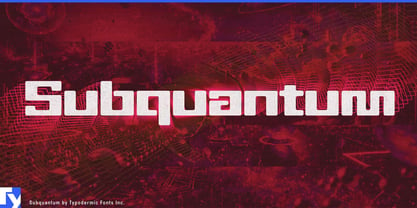
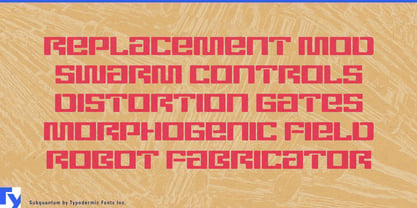
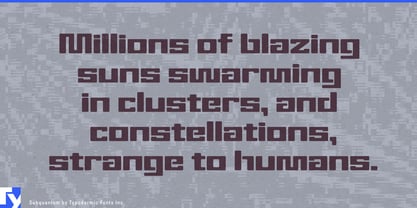
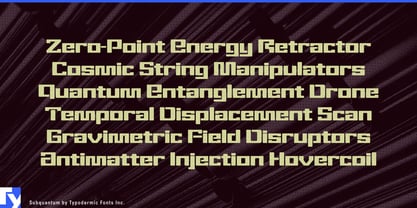
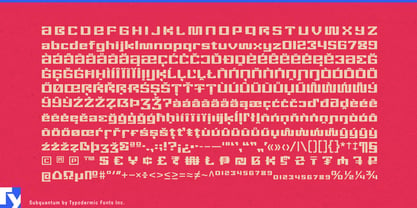
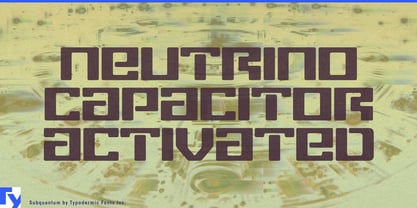
Subquantum occupies the space between those extremes. Its condensed block construction, softened corners, and mixed-case alphabet give scientific and engineering names enough visual strangeness to acknowledge that the technology is unusual while remaining grounded enough for real machines, facilities, research programs, and presentations. It works particularly well when the typography has one major job: naming the experiment, reactor, instrument, platform, or system.
Fusion energy is a natural setting. Pilot plants, plasma-confinement machines, superconducting magnet systems, heating platforms, fuel-cycle equipment, and plasma diagnostics all need names that can carry substantial technical weight without becoming visually bureaucratic. Subquantum can handle fusion-device names, research-building identities, magnet-system families, technology demonstrations, conference screens, and exhibition graphics where the machine itself is the subject.
Advanced nuclear systems present a related challenge. Microreactors, factory-built reactor platforms, transportable power systems, test programs, and heat-conversion modules are moving toward practical deployment while still feeling unfamiliar to much of the public. Subquantum can give reactor names, demonstration-site graphics, technology-platform identities, and engineering presentations a distinctly advanced character without leaning on military stencil conventions or retro atomic imagery.
Quantum sensing and precision timing offer a smaller-scale application for the same idea. Optical clocks, quantum magnetometers, gravity sensors, navigation systems, and precision-measurement platforms need sensor-family names, research-program titles, instrument graphics, and technology-showcase material that can suggest advanced science without drifting into fantasy.
Particle accelerators, neutron sources, beamlines, and detector systems create another strong territory. Scientific facilities routinely name upgrades, instruments, experimental programs, and target stations with long technical phrases that benefit from condensed display typography. Subquantum can give accelerator projects, beamline names, neutron instruments, detector programs, visitor-center graphics, and conference presentations substantial presence.
Off-world power infrastructure extends the same language into lunar reactors, surface-power systems, habitat energy platforms, and other technologies intended for sustained operations beyond Earth. Subquantum can handle system names, mission-technology demonstrations, and lunar-infrastructure presentations while keeping the emphasis on practical engineering rather than space opera.
Subquantum is most useful when an emerging technology has become real enough to need a name, but unusual enough that ordinary corporate typography undersells it.