



Direkt zum Inhalt
Zum Hauptinhalt springen

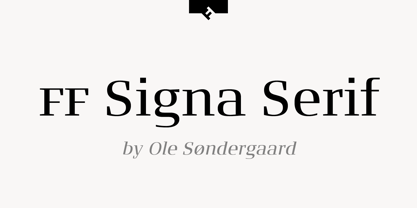
FF Signa™ Serif

von FontFont
Einzelschnitte ab $68.99 USD
Komplette Familie mit 10 Fonts: $209.99 USD
Die Schriftfamilie FF Signa Serif wurde von Ole Berntsen Søndergaard entworfen und von FontFont veröffentlicht. FF Signa Serif enthält 10 Stile und Familienpaketoptionen.

Mehr über diese Familie

Über die Familie


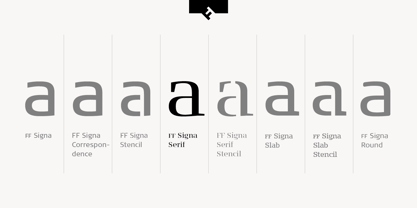
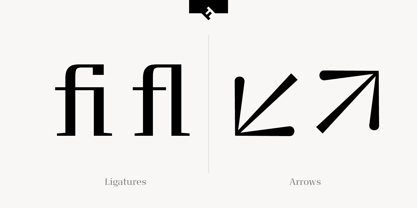
Danish type designer Ole Søndergaard created this serif FontFont in 2005. The family has 10 weights, ranging from Light to Black (including italics) and is ideally suited for advertising and packaging, film and tv, editorial and publishing as well as logo, branding and creative industries. FF Signa Serif provides advanced typographical support with features such as ligatures, small capitals, alternate characters, case-sensitive forms, fractions, and super- and subscript characters. It comes with a complete range of figure set options – oldstyle and lining figures, each in tabular and proportional widths. This FontFont is a member of the FF Signa super family, which also includes FF Signa, FF Signa Correspondence, FF Signa Serif Stencil, and FF Signa Stencil.

Designer: Ole Berntsen Søndergaard

Herausgeber: FontFont

Foundry: FontFont

Eigentümer des Designs: FontFont

MyFonts Debüt: Nov 20, 2008

FF Signa™ Serif is a trademark of Monotype GmbH and may be registered in certain jurisdictions. FF is a trademark of Monotype GmbH registered in the U.S. Patent and Trademark Office and may be registered in certain other jurisdictions.

Über FontFont

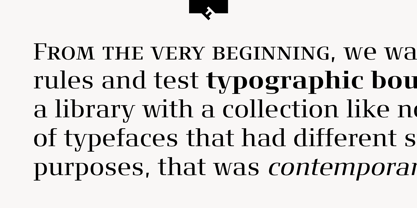
FontFont was established in 1990 when FontShop founder Erik Spiekermann and fellow type designer Neville Brody wanted to build a foundry where type was made for designers, by designers; a place where type designers were given a fair and friendly offer and where true type magic was made. “From the very beginning,” representatives of the foundry say, “we wanted to bend the rules and test typographic boundaries, to build a library with a collection like no other; a range of typefaces that had different styles, different purposes, that was contemporary, experimental, unorthodox, and radical.”

Mehr lesen

Weniger lesen