





Ir directamente al contenido
Ir al contenido principal

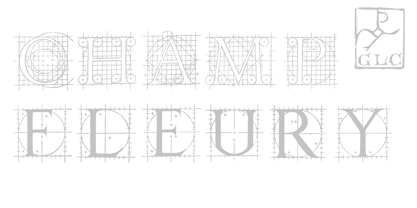
1529 Champ Fleury Initials

por GLC
Estilos individuales desde $32.00 USD
Familia completa de 2 fuentes: $50.00 USD
La familia tipográfica 1529 Champ Fleury Initials fue diseñada por Gilles Le Corre y publicada por GLC. 1529 Champ Fleury Initials contiene 2 estilos y opciones de paquete familiar.

Más información sobre esta familia

1529 Champ Fleury Set

2 fuentes

¡Mejor Precio!

Por Estilo:

$25.00 USD

Paquete de 2 estilos:

$50.00 USD

Sobre la familia


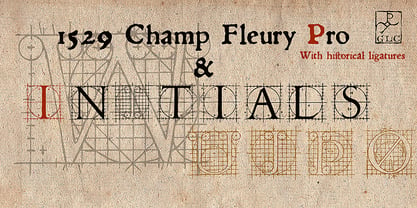
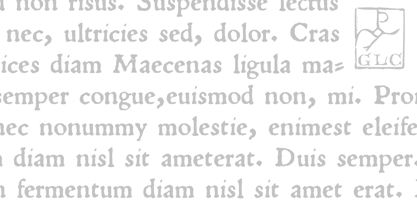
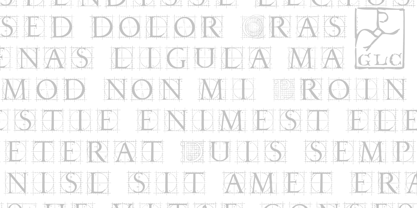
In 1529, Geofroy Tory, French scholar, engraver, printer, publisher and poet, was publishing the well known so called Champ Fleury, printed by Gilles de Gourmond, in Paris. It is a fully illustrated handbook where the author explains how to draw Roman characters. The font used for the text - a Humane/Jenson type - was not a very beautiful one, but rough and ready, and the book is well known for its capital letters designs. We are offering here the two complete historical type sets and more -- we have entirely redrawn the lacked letters: J, U and W, Eth, Lslash, Thorn and Oslash in the two initial forms. The text font, 1529 Champ Fleury Regular is now containing all characters for West European (including Celtic), Baltic, East and Central European and Turkish language, and the Initial set 1529 Champ Fleury Init is containing two complete alphabets, with a very great effort to be as close as possible to the original pictures.

Diseñadores: Gilles Le Corre

Editorial: GLC

Fundición: GLC

Propietario del diseño: GLC

MyFonts debut: Sep 20, 2010

1529 Champ Fleury Initials

Acerca de GLC

Gilles Le Corre was born in 1950 in Nantes, France. Painter since the end of 70s, he is also an engraver and calligrapher. He has been learning about medieval art and old books for as long as he can remember. More recently he has made the computer a tool for writing like the quill pen and ink. With it, he aims to make it possible to print books that look just like old ones! Beginning in 2007 he has been trying to reproduce, very exactly, a wide range of historic European typefaces, mainly from medieval and early periods of printing - his favorite period - from 1456 with Gutenberg, up to 1913 with a font inspired by a real old typewriter.

Seguir leyendo

Leer menos