







Ir directamente al contenido
Ir al contenido principal

Lamia

por Santos Bregaña
Estilos individuales desde $50.00 USD
La familia tipográfica Lamia fue diseñada por Santos Bregaña, Julen Cano Linazasoro, Maore Sagarzazu y publicada por Santos Bregaña. Lamia contiene 1 estilos.

Más información sobre esta familia

Sobre la familia


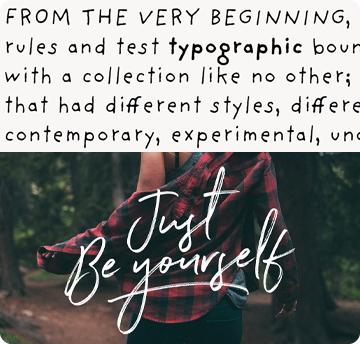
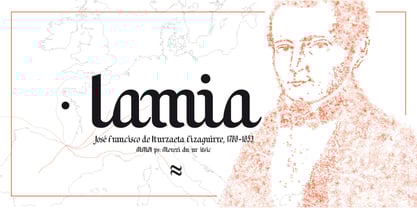
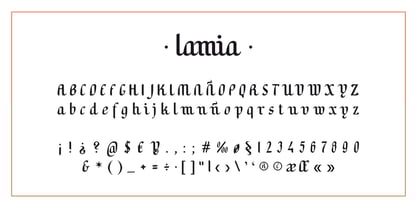
The Lamia font is inspired by the work of the most famous calligrapher of the Basque Country, Jose Francisco de Iturzaeta Eizaguirre (Getaria1788-Madrid 1853). His writing method was compulsory in Spanish schools since 1835. His "unpolished Spanish font" tried to be more effective than the more commercial English version by avoiding embellishments and excessive rear tearing. More akin with the liberal values imported by the French, his offerings sought uniformity, speed and efficiency to ensure that those in the less-favored echelons of society had an effective communication tool. From his "general collection of characters of European Letters" published in Madrid in 1833, we have chosen the "lower case pancilla reformed" represented in one of the prints. We have tried to reinterpret it by keeping its essence but also ensuring that it is viable for potential contemporary uses which, thanks to its good readability and effectiveness in longer texts, basically means as a decorative or display font. The upper case was generated using the lower case as a reference.

Diseñadores: Santos Bregaña, Julen Cano Linazasoro, Maore Sagarzazu

Editorial: Santos Bregaña

Fundición: Santos Bregaña

Propietario del diseño: Santos Bregaña

MyFonts debut: Apr 29, 2013

Lamia

Acerca de Santos Bregaña

SANTOS BREGAÑA: DESIGN AND ART DIRECTION PLANS, DRAWINGS, EXPLORATION OF DESIGNS, SEARCH FOR SIGNS, CHANCE FINDS... The etymology of the word designate comes from “to make a mark from above”. Designs could thus be signs or marks that are drawn from a higher place. We might even talk about “dieu-signes”, the signs that the gods have left us written in the form of such things as geometry, numbers, colours and shapes. In that case, an Art Director is an explorer who must look for and find these signs, walking a path and finding the clues, footprints and marks, guiding the client to a successful destination.

Seguir leyendo

Leer menos