



Pular para o conteúdo
Pular para o conteúdo principal

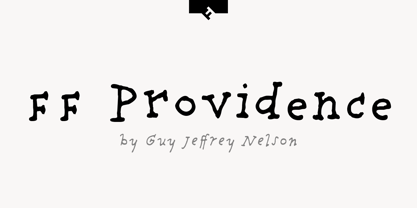
FF Providence®

por FontFont
Estilos Individuais a partir de $65.99 USD
Família completa com 4 fontes: $230.99 USD
A família de fontes FF Providence foi desenhada por Guy Jeffrey Nelson, Panos Haratzopoulos e publicada pela FontFont. FF Providence contém 4 estilos e opções de pacote familiar.

Saiba mais sobre esta família

Sobre a família


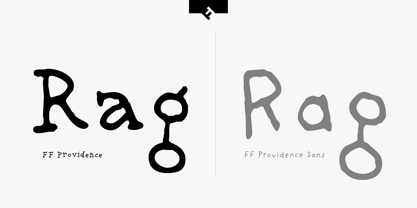
American type designer Guy Jeffrey Nelson created this script FontFont in 1994. The family contains 4 weights: Regular, Italic, Bold, and Bold Italic and is ideally suited for advertising and packaging, festive occasions, poster and billboards as well as web and screen design. FF Providence provides advanced typographical support with features such as ligatures, small capitals, alternate characters, case-sensitive forms, and stylistic alternates. It comes with proportional oldstyle figures. As well as Latin-based languages, the typeface family also supports the Greek writing system. This FontFont is a member of the FF Providence super family, which also includes FF Providence Sans.

Designers: Guy Jeffrey Nelson, Panos Haratzopoulos

Publicador: FontFont

Fundidoras: FontFont

Proprietário do design: FontFont

Estreia na MyFonts: Jan 1, 2000

FF Providence® is a trademark of Monotype GmbH registered in the U.S. Patent and Trademark Office and may be registered in certain other jurisdictions. FF is a trademark of Monotype GmbH registered in the U.S. Patent and Trademark Office and may be registered in certain other jurisdictions.

Sobre FontFont

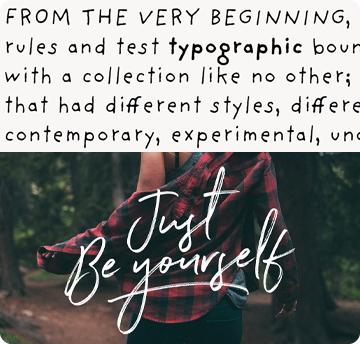
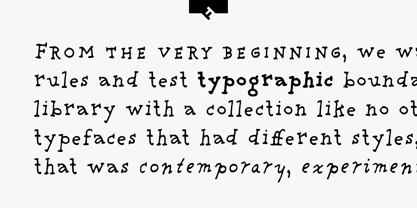
FontFont was established in 1990 when FontShop founder Erik Spiekermann and fellow type designer Neville Brody wanted to build a foundry where type was made for designers, by designers; a place where type designers were given a fair and friendly offer and where true type magic was made. “From the very beginning,” representatives of the foundry say, “we wanted to bend the rules and test typographic boundaries, to build a library with a collection like no other; a range of typefaces that had different styles, different purposes, that was contemporary, experimental, unorthodox, and radical.”

Ler mais

Ler menos