






Antique Olive™ Perfect Font Pairings
FUNDICIÓN:Linotype
DISEÑADOR:Roger Excoffon
CLASIFICACIÓN: Humanistic Sans
- Diseñado para Fonderie Olive, "Antique" es un término tipográfico europeo para designar el estilo gótico o sans serif.
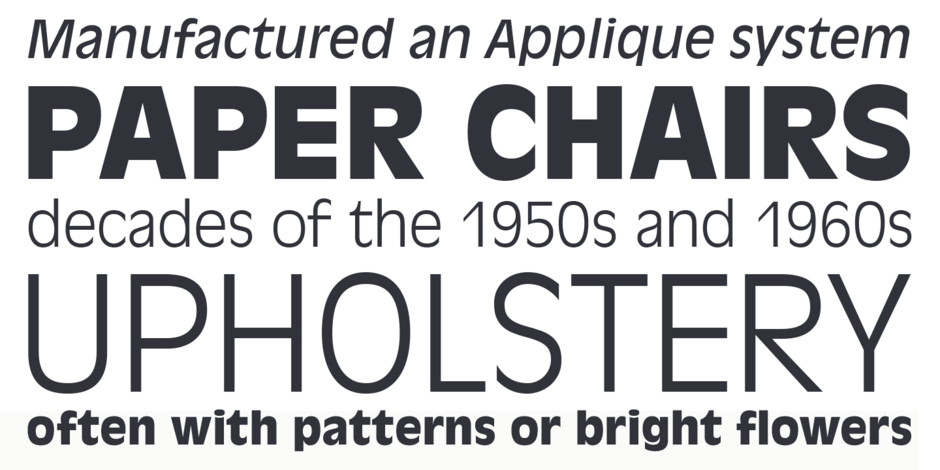
- Una familia de seis pesos, dos con cursiva, además de un diseño condensado y compacto.
- Antique Olive suele considerarse un tipo de letra de exposición. Debido a su exagerada altura x y a su reducido espaciado entre letras, sólo se recomienda el peso ligero, en tamaños grandes, para bloques de texto.
QUÉ BUSCAR EN LOS TIPOS DE LETRA QUE COMBINAN BIEN CON EL OLIVO ANTIGUO:
- Por sus formas y proporciones distintivas, Antique Olive puede combinarse con otros tipos de letra sin gracias. Sus características humanísticas sirven de contrapunto a las sin gracias geométricas, comoFutura® AhorayHarmonia™ Sans.
- Tipos de letra con gracias de estilo antiguo, comoPalatino® Nova- especialmente los pesos más ligeros, crean un atractivo contraste tipográfico con el olivo antiguo.Los diseños tipográficos con gracias y una amplia gama de pesos también combinan bien con Antique Olive.ITC Berkeley Old Style™
- EMPAREJAMIENTO DE ACEITUNA ANTIGUA CON FUENTES DE TEXTO:
&
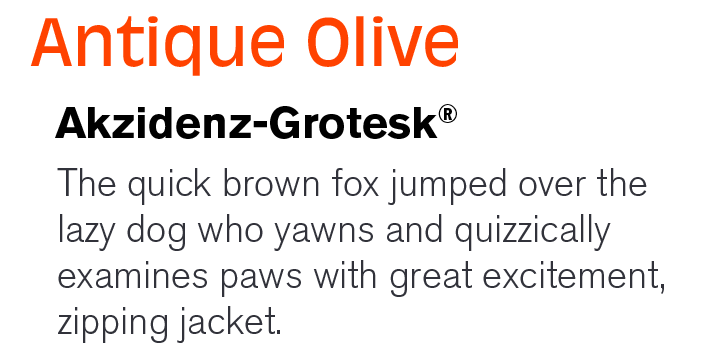
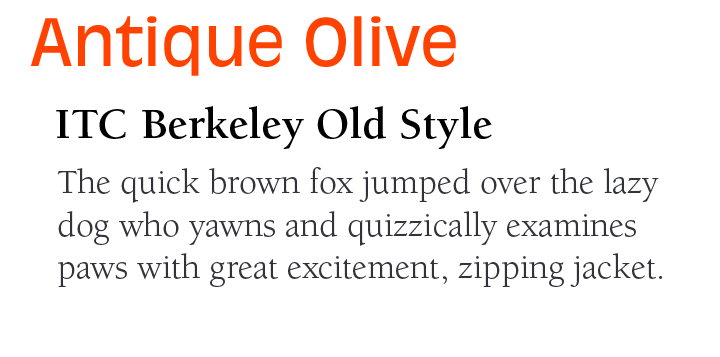
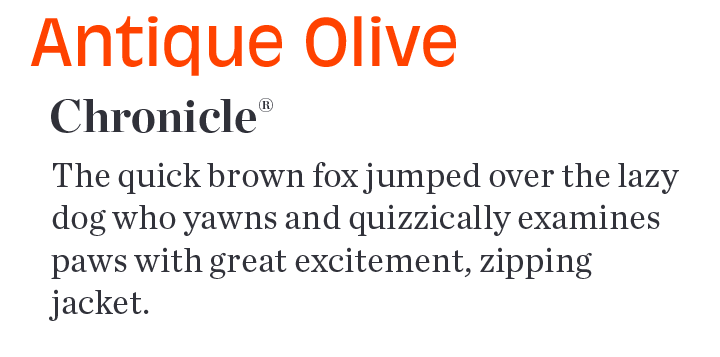
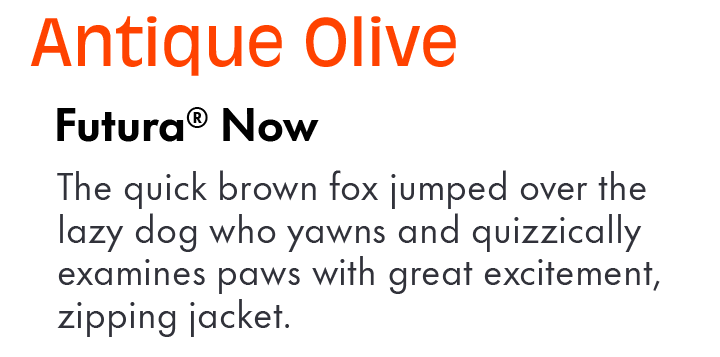
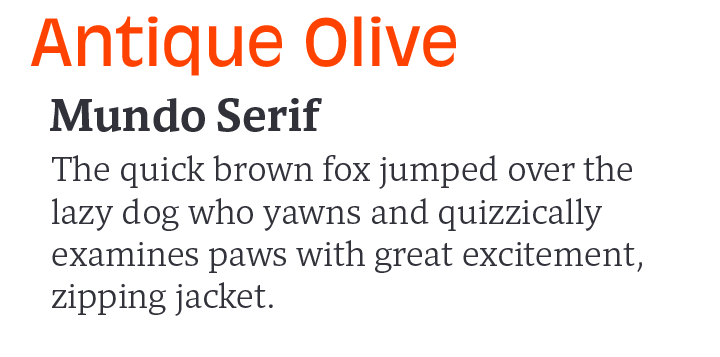
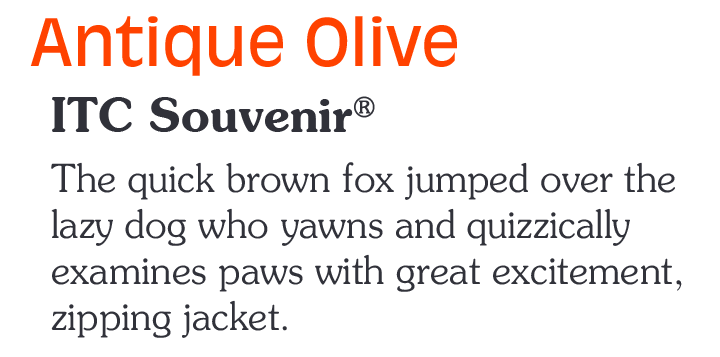
"Al crear el tipo de letra Avenir®, Adrian Frutiger se inspiró en el pasado y el futuro. Su objetivo era modernizar los estilos geométricos sin gracias de principios del siglo XX, incorporando al mismo tiempo la estética del siglo XXI. En el proceso, Frutiger también infundió un toque de humanismo orgánico al diseño.PDF version of the Antique Olive Perfect Font Pairings and view the Antique Olive™ font family.
Explore Other Font Pairing Guides

Perpetua was to be the first original typeface in Stanley Morison’s plan for building the Monotype type library. He wanted the design patterned after epigraphic rather than calligraphic letters, and asked Eric Gill to create the design.
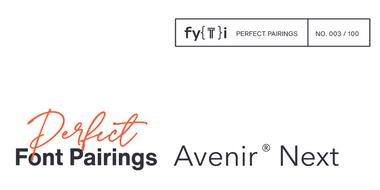
“When creating the Avenir® typeface, Adrian Frutiger drew inspiration from the past and the future. His goal was to modernize the geometric sans serif styles of the early 20th century, while embodying the aesthetics of the 21st century. In the process, Frutiger also infused a touch of organic humanism into the design.