Skip to content
Skip to main content

Innervision

by StudioMood
Individual Styles from $20.00 USD
The Innervision Font Family was designed by Ina Maria Nixdorf and published by StudioMood. Innervision contains 1 styles. More about this family

About the family


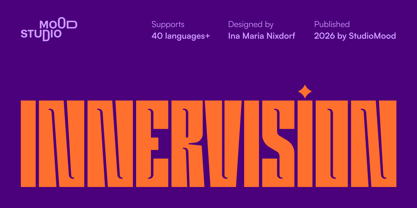
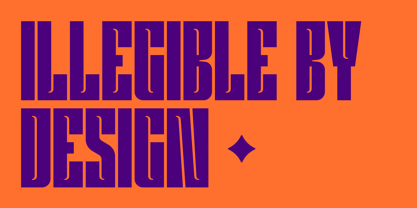
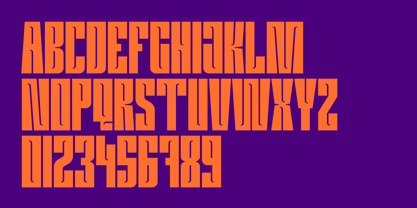
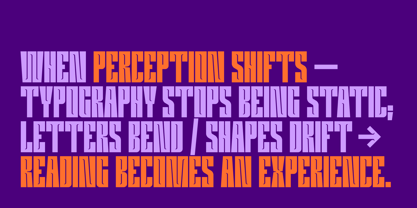
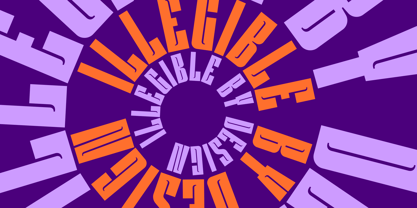
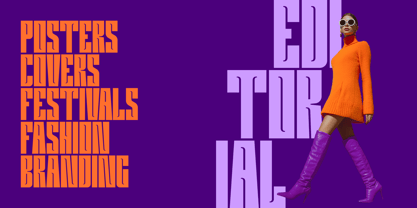
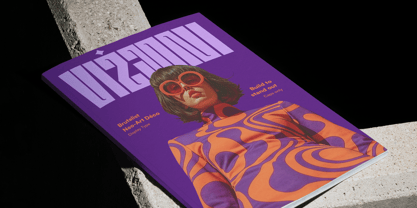
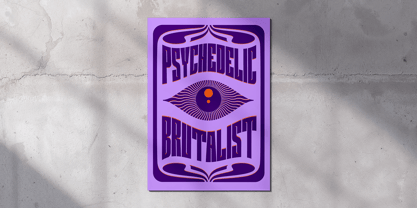
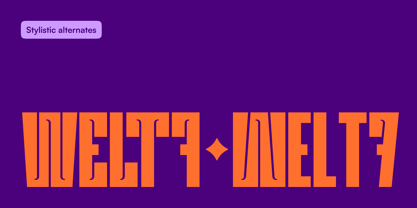
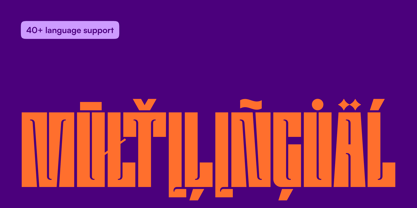
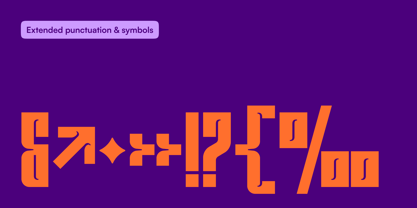
Innervision is a brutalist Neo-Art Déco display typeface defined by strict verticality, narrow proportions and strong visual tension. Its constructed, architectural letterforms shift reading from individual characters toward rhythm and pattern, creating bold and dynamic headline compositions. Designed for transformation, Innervision performs particularly well in distorted layouts, curved compositions, modular systems and motion graphics while retaining its distinctive character. The typeface is ideal for posters, editorial design, festival graphics, covers, branding and cultural publications. Innervision includes stylistic alternates, supports 40+ languages and features an extended Latin character set.

Designers: Ina Maria Nixdorf

Foundry: StudioMood

MyFonts debut: Mar 12, 2026

Innervision

About StudioMood

Studiomood is a Berlin-based collective working at the intersection of typography, digital design, and emerging technologies. We design typefaces and digital systems for contemporary visual culture – across web, apps, and immersive media. Our type foundry grew out of hands-on work in UX design, software engineering, motion, sound, and spatial interfaces. Fonts are not treated as isolated products, but as integral components of digital experiences: expressive, performative, and technically robust. The focus lies on experimental and psychedelic display typefaces – designed for posters, editorial contexts, cultural branding, album artwork, and expressive interfaces. These typefaces are informed by inner imagery, perceptual shifts, rhythm, and distortion, yet constructed with precision and intended for professional use. Studiomood combines design intuition with engineering rigor. This dual perspective allows us to develop typography that works not only on paper, but also in interactive, generative, and time-based environments – from classic layouts to AI-driven, AR, and VR applications.

Read more

Read less