
Skip to content
Skip to main content

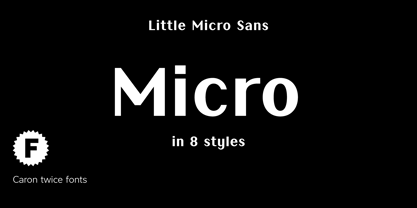
Little Micro Sans

by Caron twice
Individual Styles from $39.00 USD
Complete family of 9 fonts: $195.00 USD
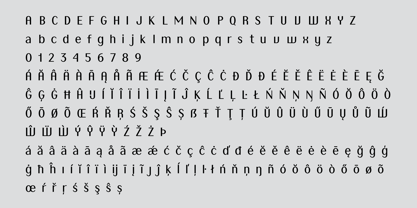
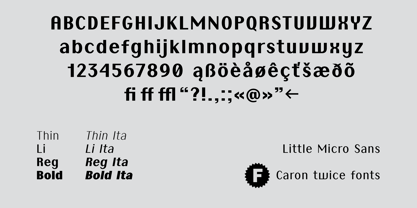
The Little Micro Sans Font Family was designed by Martin Činčár and published by Caron twice. Little Micro Sans contains 9 styles and family package options. More about this family

About the family


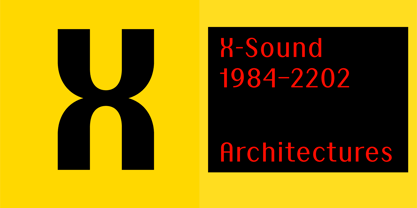
It is 1984 and Ridley Scott’s commercial for Apple tells us, “You’ll see why 1984 won’t be like ‘1984’.” The first Mac comes on the market. The Mac interface includes a font for use in small sizes called Chicago. The first version was designed by Susan Kare. The font’s modern grid-like character was also used for the first iPod screens, which is why this font is also associated with music.

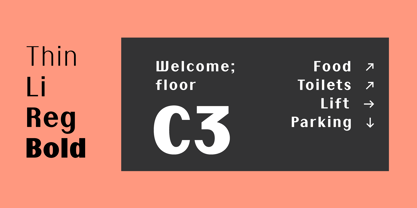
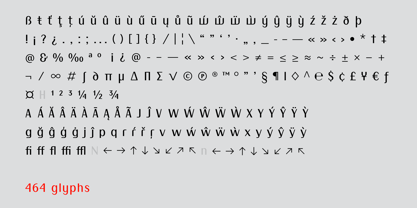
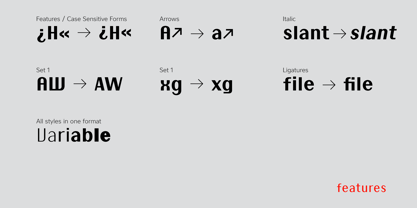
Today’s font upgrade, Little Micro Sans, is suited for small-point texts, product labels, lists of ingredients, and small captions in books, magazines, websites or applications. For online use, a variable format is particularly handy as it offers all font styles in a single file, has a faster display time and takes up less memory. Little Micro Sans is a revolution for small sizes.


Specimen:

http://carontwice.com/files/specimen_Little_Micro_Sans.pdf

Designers: Martin Činčár

Foundry: Caron twice

MyFonts debut: Feb 23, 2021

Little Micro Sans

About Caron twice

Caron Twice. Twice the care. Hi, I’m Martin Činčár, the founder of Caron Twice Fonts. In typography, this mark ˇ is called a caron. There are two of them in my last name, hence Caron Twice. These diacritics are very typical for Czech, which is where I come from. Yet as a designer I have often found myself mid-project, with a font that looked perfect, only to discover it had no support for my language or fell apart when the letterforms actually mattered. That is what Caron Twice is about. For over eight years I have been making typefaces the slow way. No quick releases chasing trends but functional, timeless typefaces crafted with deep linguistic and typographic expertise. Every glyph, every diacritic, every script designed with an understanding of not just how a letterform looks, but how it behaves across forty-seven Latin languages, Cyrillic, Greek and Hebrew. Every font here reflects that. More at www.carontwice.com

Read more

Read less