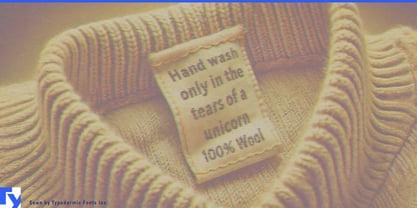
Real embroidery works beautifully on fabric. The problem begins when the same visual idea has to move onto a website, poster, package, video, hangtag, retail wall, or launch screen. Photographing actual stitching locks the designer to a particular sample and wording; building a faux-embroidery effect by hand can be slow to revise; switching to ordinary type loses the textile connection entirely.
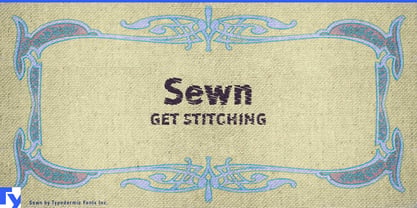
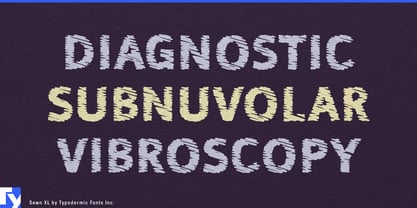
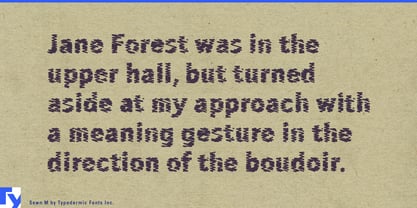
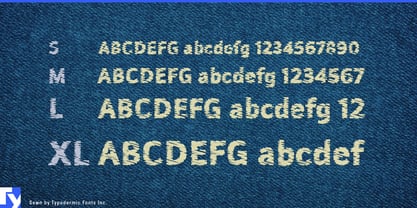
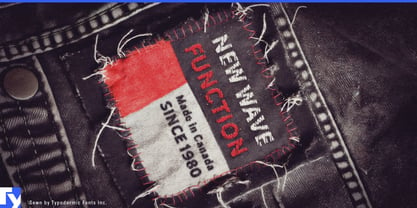
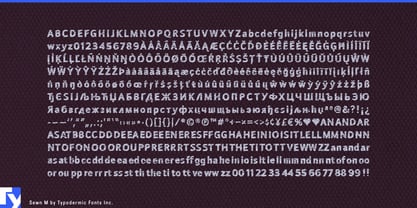
Sewn carries the look of stitching into editable display typography. Its letters are constructed from repeated thread-like marks, with S, M, L, and XL versions providing different apparent stitch scales for different display sizes. A small product graphic and an oversized campaign headline can share the same embroidered flavor without simply enlarging one fixed texture until the “thread” becomes implausibly heavy. Sewn looks stitched; it is not intended to generate embroidery-machine artwork.
Apparel launch campaigns are an especially strong setting. Sportswear, outerwear, denim, streetwear, and uniform collections may contain actual embroidered garments, but the surrounding campaign has to work across ecommerce, video, window graphics, lookbooks, social media, and retail displays. Sewn can handle collection names, campaign headlines, product-series titles, garment-detail callouts, launch-film typography, and store graphics that visually belong beside embroidered logos, chest marks, patches, and labels.
Sports merchandise and fanwear provide another natural fit. Baseball caps, varsity jackets, team hoodies, golf apparel, motorsport paddock wear, pickleball club merchandise, tournament jackets, and commemorative collections often rely on stitching as part of the product itself. Sewn can extend that association into team-store banners, merchandise-drop graphics, championship slogans, ecommerce tiles, clubhouse displays, and promotional campaigns.
Workwear and outdoor gear use the same visual vocabulary in a more technical setting. Utility jackets, packs, field apparel, climbing gear, technical outerwear, and rugged accessories frequently combine embroidered chest marks, patches, woven labels, and visibly constructed details. Sewn can carry seasonal collection names, catalog covers, product-launch graphics, field-testing campaigns, ecommerce headers, and retail installations.
Repair, resale, and garment-life programs provide another reason to borrow the stitched look. Repair counters, take-back programs, refurbished collections, visible-mending events, and garment-care campaigns can use Sewn for service identities, event graphics, collection titles, campaign headlines, and workshop signage without pretending to reproduce the stitch used in the actual repair.
Fashion collaborations, sports crossovers, character partnerships, and limited merchandise drops can extend the same treatment into pop-up graphics, packaging sleeves, ecommerce launches, promotional video, retail walls, and collection titles.
Sewn is most useful when embroidery is part of the visual language but not the production method. It brings stitched texture into screens, print, motion, packaging, and environmental graphics while giving designers several apparent stitch scales to suit the final display.