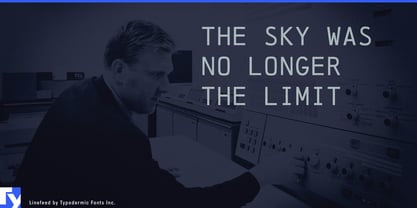
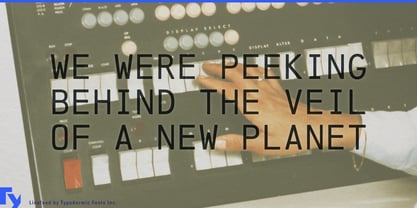
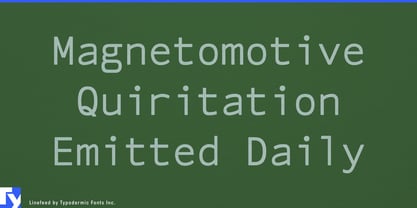
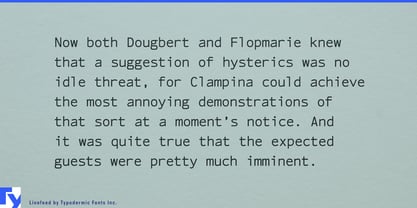
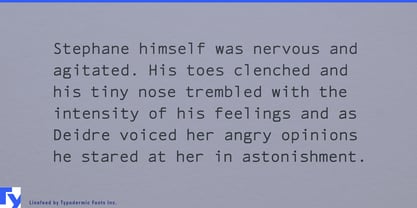
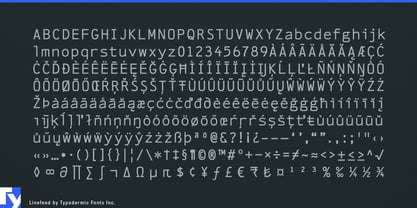
Linefeed is for information that needs to look recorded rather than written.
Technical documents increasingly mix two voices: the explanation of what happened and the record of what the system actually captured. Set both in the same corporate sans and the distinction disappears. Use a programmer’s monospace and the record starts to look like source code; use a distressed computer face and a current system suddenly looks historical. Linefeed gives machine-generated evidence its own typographic layer without pushing the design toward either coding culture or retro computing.
Its monospaced rhythm comes from 1960s and 1970s band-printer output, particularly subscription labels and institutional records. Because those machines generally worked in capitals, Linefeed extends the vocabulary with a lowercase designed to belong to the same mechanical system. The forms remain clean rather than artificially worn, allowing the machine-output character to work comfortably in contemporary reports and interfaces.
AI evaluation and agent-tracing systems are a particularly strong fit. Run IDs, model versions, timestamps, tool calls, execution steps, scores and audit excerpts can be visually separated from the analyst’s explanation. Industrial inspection and quality-control systems can use Linefeed for batch numbers, measurements, machine IDs, tolerances, calibration histories and pass/fail records.
Equipment service histories create another natural role. EV batteries, industrial tools, rental equipment, professional hardware and durable appliances can accumulate manufacturing dates, component identifiers, repair events, firmware revisions and recertification records over years of use. Linefeed gives that chronology the character of a system ledger rather than ordinary brand copy.
Cybersecurity and digital-forensics reports can use the same distinction for login histories, filenames, event IDs, authentication attempts and extracted status messages. Asset-management and logistics systems can apply it to depot scans, shipment events, maintenance records and status changes attached to high-value equipment or reusable transport packaging.
Its historical source remains useful for computing museums, documentaries, period productions and games that need reconstructed band-printer output, subscription labels or institutional records while still requiring lowercase language.
Linefeed gives the recorded layer inside a report, audit or interface a distinct voice: the part that says the system logged this.