
Skip to content
Skip to main content

Semiotica

by MYSTERIAN
Individual Styles from $15.00 USD
The Semiotica Font Family was designed by Caleb East and published by MYSTERIAN. Semiotica contains 1 styles. More about this family

About the family


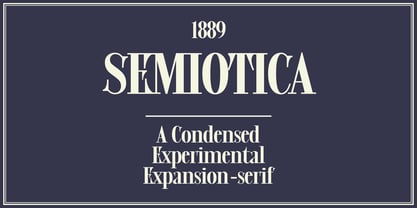
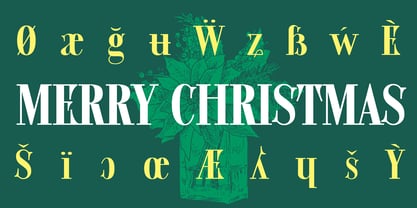
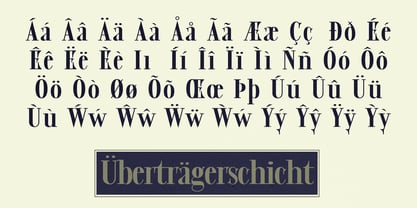
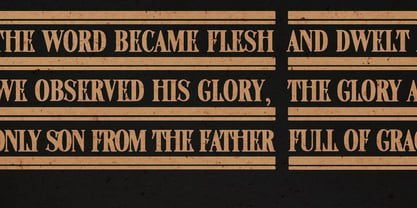
SEMIOTICA is a pioneering typeface that beautifully merges traditional typography with innovative elements. Its distinctive design features creatively flipped bracketed serifs, giving it a unique Tuscan style. Unlike its predecessors that sought radical departures from convention, SEMIOTICA achieves a harmonious balance between familiarity and originality. This versatile typeface is perfect for branding, editorial design, and web applications, making it suitable for various media. Developed during the Old School New School two-week type intensive, SEMIOTICA exemplifies the fusion of classic and contemporary typographic principles, ensuring it is a valuable addition to any designer's toolkit.

Designers: Caleb East

Foundry: MYSTERIAN

MyFonts debut: Feb 25, 2026

Semiotica

About MYSTERIAN

Learning a lot about the effects of typography as a medium of communication from Marshall McLuhan (who coined the adage; ‘the medium is the message’). You may not know it now, but the typography used in your business plays a critical role in the mind of a recipient of your message. A student of media, semiotics, business and typography (all understood to be under the category of design), I’ve started a creative service; branding. My types are part hobby, as to my interest in the forms and of semiotics, part portfolio oriented (as to demonstrate capabilities in creating unique distinctive brand assets), and of course, I'd love to design bespoke typefaces for businesses. Here's a little more on why I believe type changed the world (and what it means to us).McLuhan wrote that written language, especially when conveyed through the phonetic alphabet, created an entirely new environment that individuated ones senses. As a matter of experience, one has to exit the collective mindset of sound and song when reading, and enter into a uniform, individuated world that you alone translate. Plato and Aristotle’s rationality differ from the stories conveyed through song by Homer, with the new invention of codified language. Then came Gutenberg who introduced repeatability to bring literacy to the masses—the new era of the individual, of Descartes, Locke and Machiavelli. Our phonetic alphabet is akin to the wheel, the servo-mechanism, the road, etc., insofar as it creates an individuated environment. The alphabet was the secret to western success.

Read more

Read less