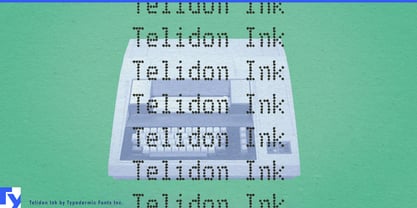
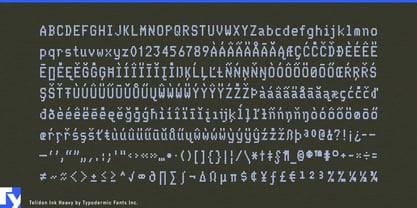
Telidon Ink begins where Telidon leaves off: at the paper. It preserves the same monospaced grid and impact-printer construction, but replaces clean circular cells with irregular impressions shaped by ribbon, paper, and mechanical contact. The wear occurs within each pin strike rather than through a distressed texture spread across the finished letters.
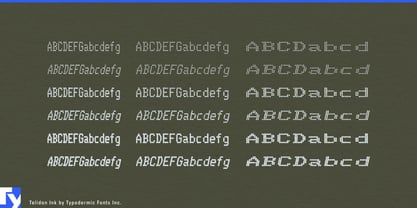
Individual dots have chipped edges, uneven fill, and slight variations in shape. Expanded styles retain their doubled horizontal impressions; heavier settings accumulate additional dots, while the italics preserve Telidon’s half-unit pin offsets. The printed surface varies, but the underlying grid remains stable. This keeps Telidon Ink readable while giving every line the physical character of impact-printed output.
Production designers can use it for transaction logs, laboratory reports, payroll records, inventory sheets, diagnostic results, shipping manifests, and other documents generated by aging office or industrial equipment. In film and television props, it suggests paper that has passed through a machine, been filed, handled, copied, and eventually recovered.
Telidon Ink also suits exhibitions and publications about computing, transportation, banking, manufacturing, and administrative history. Corporate archives can use it to evoke early data processing without reproducing a particular historical document. In editorial layouts, it can distinguish excerpts from technical correspondence, investigative material, or recovered records.
Contemporary packaging for synthesizers, recording equipment, electronic components, and industrial products can use Telidon Ink to make specifications and model numbers feel mechanically produced. Electronic and industrial music graphics gain a printed texture that remains systematic rather than merely rough.
Telidon presents the printhead’s instructions with every dot in place. Telidon Ink records what happened when those instructions encountered a worn ribbon, imperfect paper, and repeated handling.